 0844 414 6646
The Best Pumping Solutions Aren’t Designed Around Products – They’re Designed Around Projects
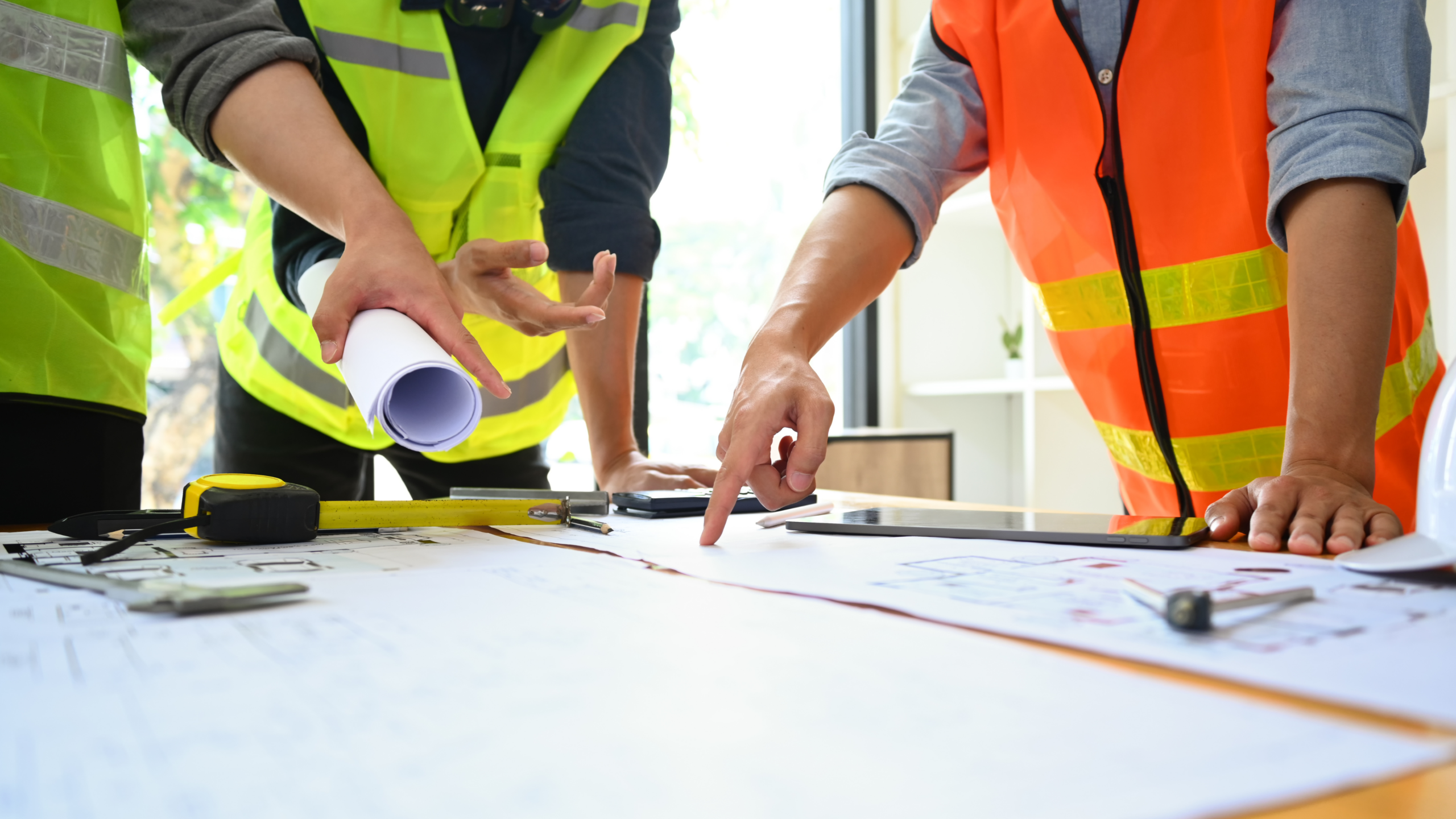
Every pumping station has one job to do: perform reliably for decades while supporting the wider project around it. Yet successful pumping infrastructure isn’t created by simply selecting equipment from a catalogue. It’s created by understanding the unique demands of each project. Here’s why the best solutions always begin with the project—not the product.
Every Pumping Station Starts with a Question
When discussing pumping infrastructure, one of the first questions people naturally ask is:
“Which pump should we use?”
It’s an understandable starting point.
After all, pumps are the heart of the system.
But after more than two decades supporting residential developments, commercial schemes, flood alleviation projects and major infrastructure works, we’ve found that the most successful projects often begin with an entirely different question.
“What does this project actually need?”
It might sound like a subtle distinction.
In practice, it changes almost every decision that follows.
The right pumping station isn’t determined by the name on a pump casing or the brand of control panel.
It’s determined by how well the entire system responds to the realities of the project around it.
That means understanding not only hydraulic performance, but also construction sequencing, adoption requirements, future maintenance, operational resilience, site constraints and the people who will ultimately own and operate the asset.
Good engineering starts long before equipment is selected.
Engineering Should Solve Problems—Not Create Them
Every project brings its own set of challenges.
Sometimes it’s a constrained footprint.
Sometimes it’s difficult ground conditions.
Sometimes it’s a complex approval process involving multiple stakeholders.
On another project it may simply be a demanding construction programme where different trades must work together within a limited timeframe.
The temptation can be to begin with a standard solution and adapt the project around it.
Our experience suggests the opposite approach generally delivers better outcomes.
The project should shape the solution.
Not the other way around.
This principle influences everything from the layout of the wet well through to maintenance access, telemetry requirements and commissioning strategy.
It also encourages project teams to think beyond individual components and instead consider how the pumping station will interact with the wider development throughout its operational life.
This is one of the themes explored in our recent article:
Related Reading: Infrastructure Planning Starts Earlier Than You Think: Why Early Coordination Delivers Better Projects
When infrastructure planning begins early, there is greater opportunity to develop solutions that work with the project rather than against it.
Every Site Tells a Different Story
Although many pumping stations perform similar functions, very few projects are identical.
A residential development may require adoptable infrastructure designed around future water authority requirements.
A commercial site may prioritise operational resilience and ease of maintenance.
A transport project may introduce restricted access, live operational environments and complex stakeholder coordination.
Flood alleviation infrastructure brings another set of priorities altogether, where performance under extreme conditions becomes paramount.
Each project presents different questions.
• Who will ultimately own the asset?
• How will engineers access the equipment in five or ten years’ time?
• Will future maintenance disrupt surrounding operations?
• How does the pumping station interact with adjacent infrastructure?
• Are there opportunities to simplify installation?
• Can long-term operating costs be reduced?
• None of these questions can be answered by selecting equipment alone.
• They require an understanding of the project as a whole.
Why Manufacturer Independence Makes a Difference
One of the greatest advantages of a project-led approach is the freedom to make engineering decisions objectively.
At Advantage Pumping Solutions, we aren’t tied to a single manufacturer or product range.
That independence allows us to focus on what matters most:
Selecting the right combination of pumps, controls and components for the specific application.
Rather than asking,
“Which products do we need to sell?”
the conversation becomes,
“Which solution best supports this project?”
Sometimes that means prioritising reliability.
Sometimes it’s maintainability.
Sometimes energy efficiency.
Sometimes installation practicality.
More often, it’s a combination of all four.
The result is a pumping station designed around performance rather than product preference.
It’s a philosophy we’ve discussed previously in Why Manufacturer Independence Matters in Pump Station Design, where we explore how objective engineering decisions often produce better long-term outcomes.
Looking Beyond Installation
Commissioning marks an important milestone.
It shouldn’t mark the end of the design conversation.
Every pumping station becomes a long-term operational asset.
It will require maintenance.
Components will eventually need replacing.
Telemetry systems will provide performance data.
Engineers will need safe access.
Future owners will inherit responsibility for keeping the system operational.
Design decisions made during the earliest stages of the project continue to influence each of those activities long after construction has been completed.
This is why successful projects increasingly consider whole-life performance rather than simply installation.
We’ve explored this principle in more detail through several previous articles, including:
• Mechanical & Electrical Maintenance: Why It’s Crucial for Long-Term Performance
• The Impact of Poorly Designed Pump Stations on Long-Term Costs
• The True Cost of a Pump Station: Upfront vs Lifetime Costs
Collectively, they reinforce an important point.
The best pumping solutions aren’t necessarily those that are easiest to install.
They’re the ones that continue performing reliably for decades afterwards.
Projects Don’t Need More Products—They Need Better Decisions
Over the years, we’ve supported pumping infrastructure across a diverse range of projects.
Residential developments.
Commercial sites.
Transport infrastructure.
Flood alleviation schemes.
Although the technical requirements differ significantly, one observation continues to stand out.
The projects that achieve the smoothest outcomes rarely do so because they selected a particular product.
They succeed because good engineering decisions were made early.
On residential developments, this often means considering adoption requirements before designs become fixed.
On commercial schemes, it may involve balancing operational resilience with whole-life maintenance costs.
Within major infrastructure, success often depends on understanding stakeholder requirements, programme constraints and operational interfaces before construction begins.
The common thread isn’t the equipment.
It’s the decision-making process.
Engineering Is Becoming More Collaborative
One of the most noticeable changes across the industry is the increasing value placed on collaboration.
Projects are no longer delivered through isolated work packages.
Developers, consultants, contractors, civil engineers and specialist suppliers are increasingly expected to work together throughout the design and construction process.
For pumping infrastructure, this collaborative approach creates significant benefits.
Early conversations allow teams to review:
• site constraints
• maintenance requirements
• installation sequencing
• telemetry and controls
• future adoption
• operational resilience
before construction begins.
That doesn’t just improve the pumping station.
It often improves the wider project.
We’ve explored this collaborative approach throughout several recent articles, including:
• Infrastructure Planning Starts Earlier Than You Think
• Building for Adoption: What Housebuilders Should Consider Before Construction Starts
• Pump Stations on Complex Sites: Designing Around Constraints, Not Against Them
• How to Ensure a Smooth Transition Between Civil & M&E Works
Together they reinforce a simple principle.
The earlier technical expertise becomes part of the conversation, the more opportunity there is to simplify delivery.
Looking Beyond Today’s Project
Construction is changing.
Housing delivery targets continue to increase.
Infrastructure projects are becoming more interconnected.
Flood resilience is moving higher up the agenda.
Clients are placing greater emphasis on long-term operational performance rather than simply achieving compliance.
These changes require a different approach to engineering.
Rather than designing individual assets in isolation, project teams increasingly need infrastructure that contributes to the success of the development as a whole.
That means asking better questions.
Not simply:
“Which pump should we use?”
But:
• “How will this system perform over the next twenty years?”
• “Will it remain practical to maintain?”
• “Does it support the wider objectives of the project?”
Those questions produce better engineering.
Looking Ahead
As projects become increasingly complex, the role of pumping infrastructure will continue to evolve.
Clients are no longer looking solely for equipment suppliers.
They’re looking for technical partners who understand how pumping systems interact with the wider project, recognise potential risks before they arise and provide practical solutions that support successful delivery.
The most effective pumping stations will always be those designed around the needs of the project—not around a predefined product range.
That philosophy has shaped our approach for more than two decades, and it’s one we believe will become even more important as the construction industry continues to evolve.
Why Choose Advantage Pumping Solutions?
At Advantage Pumping Solutions, every project starts with the same objective:
To understand what the project needs before recommending how it should be delivered.
By combining early technical input, manufacturer-independent engineering and practical delivery experience, we help housebuilders, consultants and contractors develop pumping systems that are not only technically compliant but also practical to install, straightforward to maintain and designed to perform reliably over the long term.
Our support extends from initial design discussions through to commissioning and handover, providing confidence that every stage of the project has been considered—not just the equipment.
Whether you’re delivering a residential development, commercial scheme or major infrastructure project, our role remains the same:
To provide practical engineering expertise that helps projects progress with greater certainty.
Let’s Talk
Every development presents its own challenges.
If you’re planning a residential, commercial or infrastructure project and would value an independent technical perspective, our team is always happy to help.
Whether it’s reviewing a concept design, discussing site constraints or supporting early infrastructure planning, we’ll work with you to develop a pumping solution that’s shaped around the needs of your project—not simply the products available.
Talk to Advantage Pumping Solutions today to discover how early technical collaboration can help reduce project risk, improve coordination and deliver pumping infrastructure that performs long after handover.